

A tactical plate carrier is not merely a fabric sleeve for protective inserts; it is an active structural chassis. When sourcing a dependable plate carrier UK practitioners often focus on raw pouch capacity, overlooking how poor balance degrades field mobility. You already know the grinding fatigue of an uneven setup: sagging cummerbunds, bruised collarbones, and restrictive shoulder straps that pinch every time you shoulder a rifle. Piling unneeded gear onto a loose frame creates snag hazards and turns functional kit into dead weight.
Dialling in your fighting loadout requires zero guesswork. Master carrier ergonomics, anatomical torso sizing, and modular MOLLE layouts to construct a streamlined platform that moves naturally with your body during demanding tasks. This guide breaks down carrier cut profiles, pouch placement fundamentals, and domestic delivery standards, equipping you to configure a mission-ready load-bearing system built for endurance.
Key Takeaways
- Match carrier sizing strictly to your torso anatomy and vital organs rather than civilian apparel sizes to preserve core mobility.
- Select the appropriate chassis profile, contrasting slick low-profile rigs with structural tactical loadout systems based on operational demands.
- Optimise weight balance across modern laser-cut laminate or sewn PALS surfaces by securing primary magazines along the core centreline.
- Sourcing a dependable plate carrier UK setup domestically eliminates customs delays, ensuring rapid access to mission-ready platforms.
- Follow a systematic five-step rig layout to eliminate snag hazards, shed dead weight, and maintain snag-free shoulder pockets.
What Is a Plate Carrier and How Does It Function?
A plate carrier serves as a specialised load-bearing vest engineered to hold protective inserts close to the body while acting as an equipment platform. Traditional body armour vests rely on bulky wrap-around soft armour panels that restrict core movement. Modern plate carriers decouple coverage from mobility. The chassis consists of front and rear plate bags joined by adjustable shoulder straps and an anchoring cummerbund. This framework suspends rigid plates squarely over essential organs while keeping the shoulders clear to manipulate tools and maintain unrestricted peripheral agility.
Understanding ballistic plate cuts and sizing is crucial because the plate dimensions establish the exact chassis size you require. When sourcing a reliable plate carrier UK operators, private security personnel, and training enthusiasts use these systems for distinct tasks: active protection, live-action simulation, or progressive load-bearing fitness workouts.
Slick vs Modular Tactical Carriers
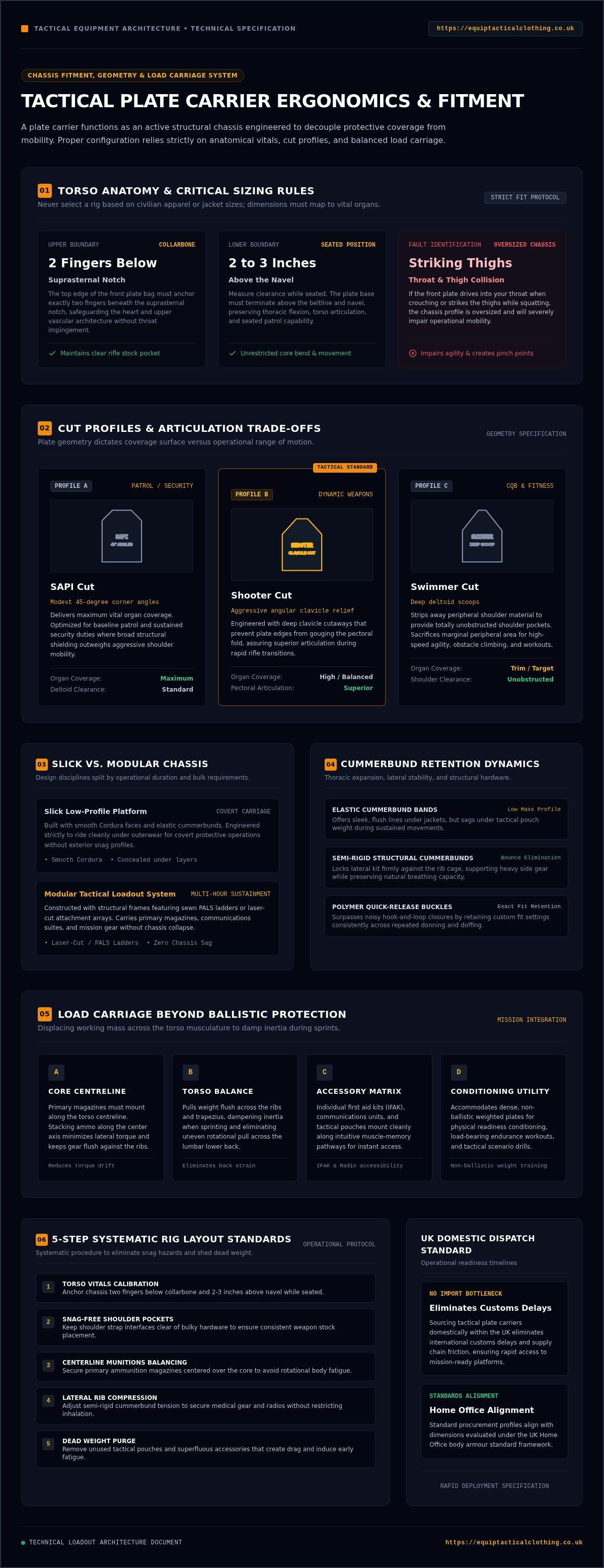
Chassis designs split into two core disciplines. Slick carriers prioritise concealment and low bulk. Built with smooth Cordura faces and elastic cummerbunds, they ride cleanly under outerwear for covert protective operations. Modular carriers feature full structural frames surfaced with PALS ladders or laser-cut attachment arrays. If your assignment demands multi-hour sustainment, modular platforms support heavy fighting loads, radios, and mission kit without chassis deformation or shoulder strain.
Load Carriage Beyond Ballistic Protection
Protective carriage is only half the equation. A properly fitted platform displaces working mass across the torso musculature. It pulls gear flush against the ribs and trapezius, dampening inertia when sprinting or negotiating obstacles. Ammunition magazines, communications suites, and critical medical items remain immediately accessible along natural muscle-memory pathways.
- Torso balance: Eliminates uneven pull across the lower back during dynamic maneuvers.
- Accessory distribution: Mounts tactical pouches, individual first aid kits (IFAK), and radios within rapid reach.
- Conditioning utility: Accommodates dense, non-ballistic weighted plates for physical readiness training and tactical scenario drills.
Treat the carrier as an integrated load carriage system. Select the platform based on load volume, movement requirements, and task duration.
Plate Carrier Sizing and Cut Profiles: Ensuring Unrestricted Mobility
Torso vitals dictate carrier sizing. Never select a rig based on your t-shirt or jacket size. A properly sized chassis covers the heart, lungs, and surrounding major vascular architecture without protruding into your beltline. Anchor the top edge two fingers below the suprasternal notch at your collarbone. The bottom boundary must rest approximately two to three inches above the navel while seated. If your front plate strikes your thighs or drives the collar into your throat when squatting, your chassis is oversized.
| Cut Profile | Geometry Profile | Primary Benefit | Optimal Deployment |
|---|---|---|---|
| SAPI | Modest 45-degree corner angles | Maximum organ coverage | Baseline patrol and sustained security duties |
| Shooter | Aggressive angular clavicle relief | Superior pectoral articulation | Dynamic rifle transitions and active field maneuvers |
| Swimmer | Deep deltoid scoops | Unobstructed shoulder pockets | High-speed CQB, obstacle navigation, and fitness |
Evaluating Plate Cut Styles
Shooter cuts taper inward at the upper chest, preventing rigid edges from gouging the pectoral fold during stock placement. While standard procurement profiles match dimensions evaluated under the Home Office body armour standard, active civilian and training users benefit from trimmer silhouettes. SAPI cuts protect broader surface area. Swimmer cuts strip away peripheral material entirely, freeing the deltoids for overhead reaching and rapid shooting stances. You sacrifice marginal side protection for immediate mobility.
Cummerbund Systems and Retention
Cummerbund tension dictates thoracic breathing capacity during sustained exertion. Elastic bands offer sleek profiles beneath outer layers, but they sag under pouch weight. Semi-rigid structural cummerbunds eliminate bounce, locking lateral equipment firmly against the rib cage.
Modern quick-release hardware surpasses noisy hook-and-loop closures. Polymer side buckles retain your precise adjustment settings while permitting rapid doffing in seconds. Adjust your cummerbund while inhaling deeply. If the chassis compresses your chest cavity during a dead sprint, loosen the rear shock cords. For operators setting up a tailored plate carrier uk platform, dialling in torso clearance first ensures total movement freedom before mounting mission kit.
MOLLE Architecture and Weight Distribution: Plate Carrier vs Alternatives
Unbalanced gear wrecks posture. Mounting all critical supplies on the front plate bag pulls your spine forward, exhausting lumbar muscles within hours. Tactical load carriage demands symmetrical weight distribution around your true centre of gravity. Keep heavy sustainment assets tight against your ribs and abdominal core.
Fabric architecture directly influences baseline bulk. Traditional nylon with sewn PALS webbing provides dependable tear resistance, yet it absorbs rain and adds unnecessary grams. Laser-cut composite laminates cut dry tare weight by roughly 20 to 30 percent. They sit flatter against the chest, reduce snag profiles in tight spaces, and won't hold water during wet field operations. While frontline tactical systems align with rigid structural expectations evaluated under the Home Office body armour standard, modern civilian platforms maximise agility through streamlined laser-cut interfaces.
Plate Carrier vs Chest Rig Load Carriage
Operational mandates dictate whether you run an armoured platform or a chest harness. Plate carriers offer vital protection and firm mounting stability, but they trap heat. Chest rigs strip out protective inserts entirely. They excel during long-range foot patrols, humid scenarios, and high-mobility training where core ventilation matters more than torso coverage.
Modern loadouts solve this dilemma through modularity. Detachable front placards clip effortlessly into chest harness straps or secure directly onto your plate carrier uk platform via standard buckles and hook-and-loop backing. Swap mission setups across platforms in seconds without re-weaving individual pouches.
Balancing First-Line and Second-Line Gear
Divide equipment deliberately between first-line belt gear and second-line carrier platforms. The battle belt houses immediate survival tools: secondary ammunition, dump pouch, and rapid-access medical essentials. The carrier manages sustained mission assets, primary rifle magazines, and tactical communications.
- Clearance gaps: Maintain two inches of vertical separation between the bottom of your plate bag and your battle belt to prevent gear binding when crouching or driving.
- Dominant arm clearance: Keep the cummerbund on your weapon-handling side slick to avoid snagging your elbow or holster during transitions.
- Profile stacking: Run single-layer magazine shingles across the front abdominal plane rather than double-stacking pouches, preserving a low prone silhouette.
How to Configure a Mission-Ready Plate Carrier: Step-by-Step Rig Setup
Setting up your kit requires a disciplined, methodical sequence. Avoid slapping pouches on random webbing slots. Follow this structured five-step mounting protocol to ensure your chassis functions as a cohesive tactical system:
- Fit bare chassis: Adjust shoulder straps and cummerbund with plates or weighted inserts installed, confirming correct anatomical placement.
- Mount primary munitions: Secure central magazine placards flat against the front abdominal workspace.
- Position medical kit: Place life-saving trauma equipment where either hand can access it instantly.
- Route communication wires: Guide wiring and hydration tubes through shoulder guides to strip out snag hazards.
- Execute load verification: Run, jump, and drop prone to check balance, silence equipment rattles, and verify retention.
Keep your fighting platform lean. Piling on redundant gear wastes energy and restricts movement.
Mounting Front Placards and Magazine Pouches
Centre rifle or submachine gun magazines across your lower chest. This anchors dense ammunition weight directly along your core axis, reducing perceived fatigue. Choose between open-top elastic cells with retention bungees for rapid reloads or full-flap closures to seal out mud during prolonged field exercises.
Never double-stack magazine pouches on your front plate bag. Two rows of rifle magazines push your torso several inches off the ground when you drop prone, creating an unnecessarily high target silhouette.
Integrating IFAKs and Utility Essentials
Trauma care permits zero compromise. Mount your individual first aid kit (IFAK) where you can reach it with either hand under stress. Under-plate dangler pouches or roll-up kits resting beneath the front plate bag provide ideal ambidextrous access without consuming critical cummerbund real estate.
Reserve the sides of your chassis for compact utility items. Fix small general-purpose pouches rearward on the cummerbund to keep your dominant side clear for sidearm draws or unhindered arm swings. Mount hydration bladders or sustainment packs flat across the rear plate bag. Avoid loose straps that snag on doorways or vehicle hatches.
Ready to build a reliable loadout? Explore tactical plate carrier UK systems and pouches to configure your platform for dependable field performance.
Selecting Tactical Plate Carriers in the UK: Quality and Dispatch
When sourcing a dependable plate carrier UK buyers must balance structural textile endurance with dependable supply chains. Legally, civilians across England, Scotland, Wales, and Northern Ireland can freely purchase and own tactical nylon carriers and non-ballistic weighted plates. No firearms certificate, SIA licence, or special permit is required. Sourcing platforms from overseas distributors often introduces frustrating friction. Customs inspections create weeks of processing delays, accompanied by surprise import fees and administrative handling surcharges. Buying from a stocked domestic distributor eliminates border bureaucracy and gets your kit into service immediately.
Material Integrity and Hardware Standards
Examine the base textiles before committing to a platform. Premium 500D Cordura nylon offers an optimal balance between high tear strength and low tare weight. Heavy-duty 1000D fabric delivers maximum abrasion resistance for crawling across gravel or brush. Inspect structural load points carefully. Quality carriers feature dense bar-tack stitching across high-stress MOLLE channels and double-stitched shoulder strap connections. Verify robust ITW Nexus or UTX buckles at cummerbund junctions. Fragile generic plastics crack under freezing weather, causing sudden hardware failures during high-impact movement.
EQUIP Tactical Clothing: Ready for Deployment
EQUIP Tactical Clothing operates as your dependable domestic quartermaster, supplying rugged load-bearing systems built for demanding field conditions. Whether outfitting for live-action scenario exercises, private security operations, or weighted endurance conditioning, our modular platforms integrate directly with an extensive pouch ecosystem covering rifle magazines, submachine gun cells, and trauma kit needs.
Avoid overseas shipping wait times and import penalties. Orders placed before 2 PM qualify for prompt next-day UK dispatch, providing field-ready kit without supply line friction. Ready to upgrade your loadout? Explore plate carriers at EQUIP Tactical Clothing to secure dependable tactical gear today.
Deploy Your Operational Loadout with Confidence
A mission-ready tactical platform hinges on three fundamentals: anatomical torso sizing, disciplined weight balance, and bombproof construction. Sizing your chassis strictly to your vital organs preserves core mobility and unhindered shoulder articulation. Centring ammunition along the core abdominal axis while positioning medical kit for ambidextrous reach eliminates snag hazards and suppresses fatigue during sustained operations.
Selecting the right plate carrier UK operators trust means securing durable materials without supply line friction. EQUIP Tactical Clothing delivers hard-wearing Cordura platforms engineered for harsh field environments, supported by an extensive modular ecosystem of compatible magazine cells and trauma pouches. Take the guesswork out of gear procurement. Orders placed before 2 PM qualify for rapid next-day UK delivery across the mainland. Upgrade your loadout with field-ready plate carriers at EQUIP Tactical Clothing and step into the field with total operational confidence.
Frequently Asked Questions
Are plate carriers legal to buy and own in the UK?
Yes, plate carriers are completely legal for civilians to purchase, own, and wear across England, Scotland, Wales, and Northern Ireland. You don't need a firearms certificate, shotgun licence, or SIA badge to buy one. Bare tactical carriers are classified as standard load-bearing equipment. The sole legal restriction is that tactical load-bearing platforms must not be used in the commission or furtherance of criminal activity.
What size plate carrier do I need for my body frame?
Size your chassis strictly to your vital organs, not your shirt size. Measure the distance between your collarbone notch and two inches above your navel, then measure the width between your nipples. A standard Medium SAPI or 10-by-12-inch cut fits the vast majority of adult torsos. The adjustable cummerbund accommodates chest expansion and waist variations without altering plate position.
Can I use a tactical plate carrier for weighted fitness workouts?
Yes, tactical plate carriers excel at weighted conditioning, calisthenics, and Murph challenge events. Simply insert flat, non-ballistic steel or cast-iron workout plates into the plate bags. Structural cummerbunds and padded shoulder sections secure the mass firmly against your thoracic cage. This prevents erratic bouncing, chafing, and lower back strain during sprints, box jumps, and pull-ups.
What is the difference between a plate carrier and a chest rig?
A plate carrier features structural front and rear plate bags designed to hold protective inserts or conditioning weight. A chest rig is an unarmoured textile harness engineered solely for ammo and equipment carriage. Chest rigs offer superior ventilation and lightweight mobility for hot climates or long patrols, whereas carriers prioritise torso stability and rigid load displacement.
How do I clean and maintain a Cordura plate carrier?
Hand wash your carrier in lukewarm water using a mild, non-detergent soap and a soft nylon bristle brush. Never wash tactical nylon in a domestic washing machine or tumble dryer, as extreme heat and agitation degrade internal polyurethane coatings and weaken hook-and-loop fasteners. Strip out all foam inserts and pouches before cleaning, then hang dry away from direct sunlight.
Can you mount standard MOLLE pouches onto laser-cut plate carriers?
Yes, standard MOLLE and PALS pouches mount cleanly onto laser-cut laminate chassis. Precision-cut slots adhere to standard military spacing dimensions, allowing traditional woven webbing straps and stiffened tabs to lock securely in place. When building a versatile plate carrier UK operators often mix older sewn pouches with modern laser-cut frames, preserving compatibility while shaving substantial base weight.
Do plate carriers sold by EQUIP come with certified ballistic plates?
No, EQUIP Tactical Clothing does not sell certified ballistic plates or live armour inserts. All carriers are supplied as durable textile load-bearing systems. They arrive ready to accept non-ballistic weighted plates for fitness, training foam inserts, or independently sourced protective panels. EQUIP specialises strictly in dependable modular carriers, pouches, tactical clothing, and rugged field accessories.